Shelf V · Breakfast Notes
Alpine guesthouse breakfasts: what the rate includes
The best breakfast value on this site is structural, not sentimental: alpine houses include a real table in a EUR 90 to 120 room, because their guests walk twelve kilometres before lunch.
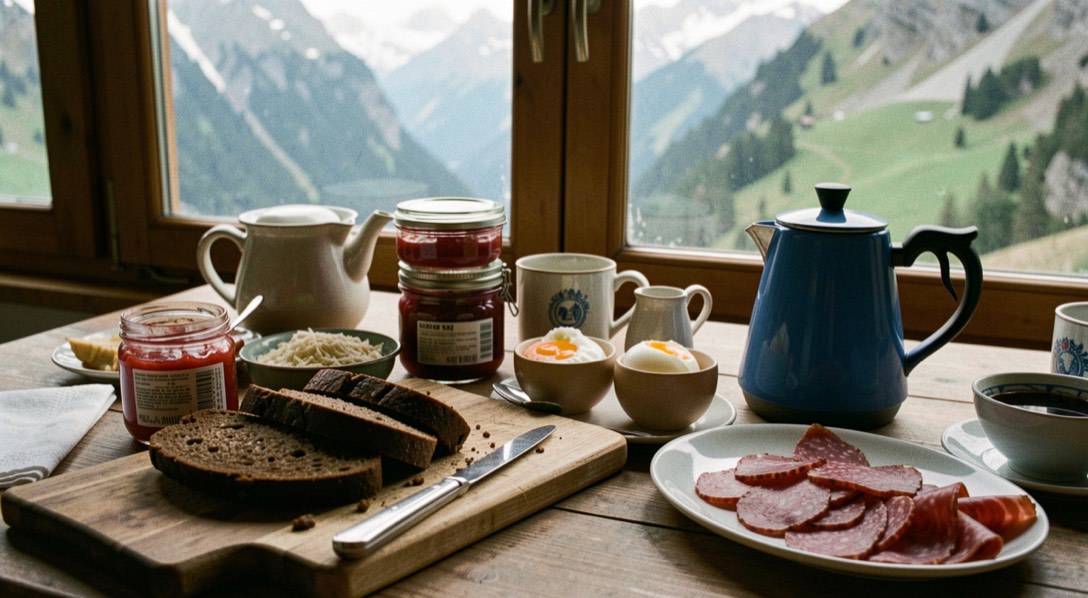
The capitals rarely win the breakfast comparison, and this note has stopped apologising for saying so. From the Julian Alps to the Pusteria valleys, the alpine guesthouse includes, in a room rate of about a hundred euros, a table the city hotels would disaggregate, brand and underdeliver. The reason is structural, not sentimental: the guests walk twelve kilometres before lunch, and a kitchen that prices that in is a kitchen worth sleeping above.
The bread board opens the argument
Alpine bread is not a garnish. The board arrives with dark loaves from the village bakery, rye that needs chewing and seeds that explain the jam, and by the scale of the continental note the first mark is settled before an egg appears. The difference from the wrapped city roll is not luxury but intention: a household that buys bread where bread is taken seriously, because the household eats it too. The board itself is a map of the valley: rye from the farms that keep it, seven grain loaves from the village baker, and in South Tyrol the dark seed studded Schuettelbrot, a flatbread that travels without wrapping because it never lasts long enough to need any.
Eggs, speck and the middle courses
The middle of the table carries the protein: eggs cooked to order in the better Slovenian houses, soft boiled under timers in South Tyrol, beside speck and cheeses from within a valley or two and glass pots of yoghurt with honey when the season allows. This is where the fifth mark, generosity, is earned: a second plate of speck earns a nod, not a calculation, because the mountain guest has earned it before nine and the kitchen knows it. Speck itself is a protected geography: the South Tyrolean version is smoked and air cured by rule, and the Slovenian houses more often serve their own prosciutto or estate salami, so the plate changes at the border even when the mark does not.
The sweet course and the coffee
Slovenia sends potica, the rolled walnut cake, on weekends and often on weekdays too; South Tyrol answers with apple strudel from the previous day's oven and apricot jam in the host's own jars. Then coffee: a machine that has been cleaned, beans that are fresh, refills that arrive unasked. The marks apply unchanged from the continental note, and the valleys pass them at prices the capitals spend on wrapped portions.
Muesli came to Europe from the Swiss Alps and the alpine table never gave it back; between the Bircher bowl, the seeds and the honey, the sweet course doubles as the walker's second breakfast, folded into a pocket against the first summit of the day.
The arithmetic, in euros
Set the alpine table against its city alternatives and the rate answers for itself:
| Morning | Typical cost | What it delivers |
|---|---|---|
| City buffet | EUR 7 to 10 on top of the room | Three marks, lunch at noon |
| Quarter cafe | EUR 4 to 6 | Good coffee, no eggs to order |
| Alpine table | Included at EUR 90 to 120 | Five marks, lunch postponed |
On a walking week the last line wins twice: the calories carry the morning, and the postponed lunch deletes a second restaurant bill every day, which is how a EUR 105 room with a real table undercuts a EUR 85 room without one. The comparison also holds in reverse: a city hotel that includes a table of this quality is worth its supplement, and the city notes say so where they find one; the alpine table wins on ratio, not on exclusivity.
Finding these tables before booking
The listing predicts the table the way the six checks predict the room:
- The words breakfast included, not available; the two describe one table at different prices.
- Household words: homemade, own jams, farm eggs; vague buffet wording predicts vague buffets.
- Photographs of bread boards rather than juice machines.
- A house under twenty rooms in a walking village, where the kitchen eats its own cooking.
- A rate of EUR 90 to 120 including the table; a EUR 70 room serving none is not a bargain by this arithmetic.
Winter is the honest exception. The walking guests are gone, the tables thin toward ski breakfasts, and the same house can serve two different mornings a year; the walking weeks, late June to September, are when the kitchen is at full strength and the marks are fair to award.
Mistakes to avoid
The classic errors: booking the walking weeks without booking the table, then paying twice for mornings; grading the winter season by summer spreads, when the fruit and the eggs both thin; assuming a smart spa wing implies a smart kitchen, since the two budgets compete; and skipping breakfast to reach a trailhead, which trades the best meal of the day for an hour of hunger on the climb. The alpine table is the standard the rest of this notebook measures against, and it is included.