Shelf V · Breakfast Notes
The continental breakfast, graded: a five mark method
Breakfast decides more bookings than lobbies do, so the scale is published rather than implied: five marks, plain definitions, and the price points where a hotel table beats the corner cafe or loses to it.
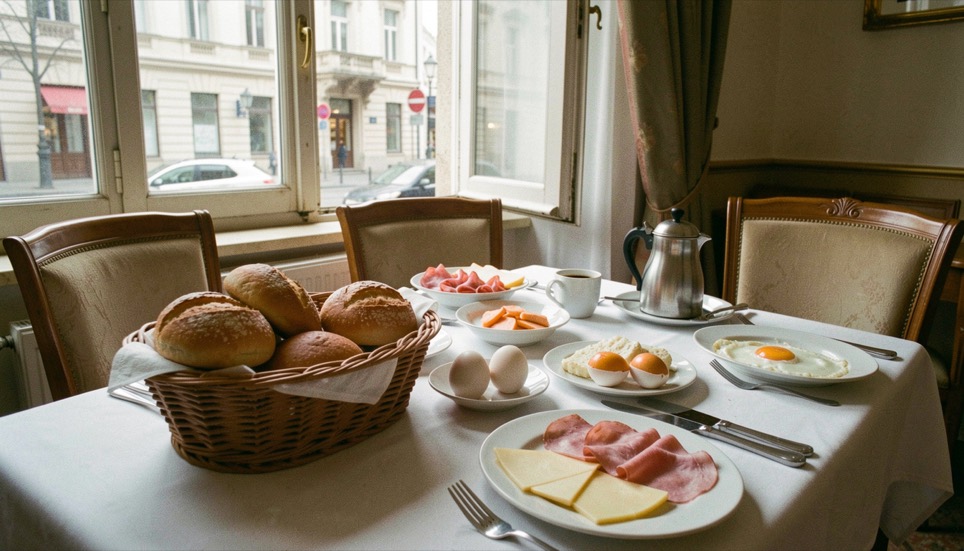
A hotel breakfast is the house answering a question in food, and it is the one part of a small hotel that photographs cannot fake. That is why the notes on this site price the table before the lobby, and why the scale is published rather than implied: five marks, plain definitions, and the price points at which the table wins or loses, so that any reader can grade any breakfast in any city and know what the verdict is worth.
The five marks
One mark each, awarded or withheld on sight:
| Mark | What earns it | What fails it |
|---|---|---|
| Bread | Bakery crumb, eaten plain | Cellophane and cotton wool |
| Eggs | Cooked within sight of the order | Powder from a tray |
| Coffee | Refilled unasked, drinkable plain | An unserviced machine |
| Generosity | A second roll earns a nod | A second roll earns a look |
| The bill | Food delivered matches price charged | Wrapped portions at EUR 9 |
Four marks or better is a table worth planning a morning around; two or less is a reason to book a rate without breakfast and keep the cafe budget.
The marks are deliberately unromantic. Bread is a supply chain decision a house makes weekly; eggs are a kitchen decision made daily; coffee is a cleaning decision made hourly. A table can fail any one of the three without malice, which is why the marks are independent, and why a warm welcome cannot buy back a point lost to an unserviced machine.
The bottom of the scale
The insult exists and recurs in every price band: wrapped cheese and ham in plastic, bread in cellophane, juice from a carton, coffee from an unserviced machine, charged at EUR 8 to 10 or folded silently into the rate. The rule here is bookkeeping, not anger: a house that serves that table will cut the same corner on the mattress, and the habit usually shows in the fourth photograph, one of the six checks of a listing.
The economics are easy to reconstruct. Wrapped portions cost cents, need no kitchen staff and survive a power cut, so a house under pressure reaches for them quietly and charges as if it had not. The defence is the published band: when a rate quotes breakfast at EUR 4 or bundles it in for nothing, the wrapped table loses its hiding place.
The honest middle
The European average is respectable and unmemorable: real bread, boiled eggs, a cereal row, yoghurt in pots, coffee that asks for sugar. It costs EUR 5 to 8 and earns three marks; there is no shame in booking it, only in planning a day around it. The Pest side of Budapest plays this middle well, buffet at EUR 6 to 8 with the market hall upstairs to finish the morning properly.
Season matters at the middle more than anywhere else. The same table that earns three marks in June on apricots and tomatoes earns two in February, and the scale judges fruit by the calendar rather than the label. Coffee separates the middles faster than anything: a bean to cup machine, cleaned, lifts a dull table to respectable, and an instant dispenser drops it below the bakery two streets away.
When the hotel table wins
Breakfast earns its place in the rate under two conditions: it is included, or it costs about what the quarter's cafe would anyway while delivering more than the cafe can, eggs to order above all. At EUR 8 to 12 on top of a city room rate it needs to be exceptional, and rarely is. The structural winners are the mountains, where the walking guest's breakfast is included in rooms of EUR 90 to 120 and postpones lunch into the afternoon, saving a second restaurant bill every day of a walking week.
Families run the numbers differently: two children's portions at cafe prices often exceed the supplement for the whole household, and a table that lets a child take one of everything pays for itself in a single morning. Half board changes the question entirely, which is why the mountain notes price dinner and breakfast together and the city notes never do.
Grading a table in sixty seconds
The scale compresses to a doorway checklist:
- Bread: look at what other tables leave behind; picked clean is the verdict.
- Eggs: is there a pan in the room, or only a tray under a lamp?
- Coffee: watch one refill happen before sitting down.
- Generosity: read the staff, not the menu; the face at the pot decides the mark.
- The bill: ask the price before the first cup, included or not.
Mistakes to avoid
The classic errors: paying a breakfast supplement twice, once in the rate and once at the bakery, because the wording was never read; assuming a smart lobby predicts a smart table, when the correlation runs the other way; grading the fruit in February by August standards; and staying loyal to a thin table out of politeness, which is a subsidy the house never acknowledges. The scale exists so that the argument is settled by marks, not by mood, and the listing checks settle it before the deposit.